For a while now, I’ve been actively logging the films I watch on Letterboxd. Feel free to follow me there. One list in particular has always intrigued me on that platform: films that have been watched more than a million times. In many ways, it reflects the platform’s most popular titles, and since the Letterboxd audience tends to be slightly more “snobbish” than, say, IMDb, those numbers are especially interesting.
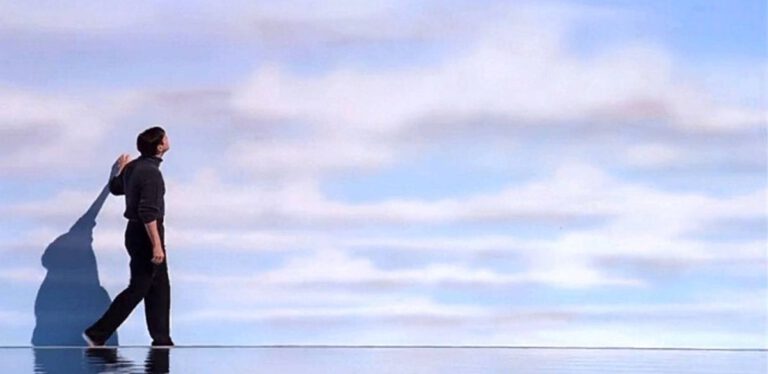
Looking at that list, you’ll find titles like Interstellar, Fight Club, and The Dark Knight. But sitting comfortably in fifth place is a somewhat unexpected contender: The Truman Show. Or maybe not so unexpected. The film has always been popular despite its relatively modest budget. Still, I felt it was time to revisit it after a year.
And honestly, I came away thinking that it hasn’t aged nearly as well as its reputation suggests.
Revealing Too Much, Too Soon
From the very beginning, it’s clear that Truman, played by Jim Carrey, is living inside a constructed, reality show-like environment. That’s where my first issue lies. With the benefit of hindsight, it would have been far more compelling if the audience discovered this alongside Truman, slowly piecing it together.
Instead, the viewer is positioned as an observer, watching Truman gradually unravel as he begins to realize that his entire world is fake. While that concept is inherently dystopian, it loses some of its impact by revealing its hand too early.
A “Genius” with Questionable Decisions
The whole setup is orchestrated by the so-called genius director of the show, played by Ed Harris. But for someone portrayed as brilliant, his decisions often feel questionable at best.
Spoiler alert. Why wasn’t the woman Truman falls in love with immediately removed from the set? Instead, she’s awkwardly taken away by a man posing as her father, without much resistance. Moments like that feel forced and undermine the logic of the world.
A World That Feels Too Artificial
Then there’s the behavior of the people within Truman’s reality. The way citizens move around, almost as if they’re stuck in repetitive loops, makes everything feel overly staged. Instead of creating a believable illusion, it only raises suspicion. If anything, it makes Truman’s eventual realization feel inevitable rather than earned.
There are so many odd narrative choices that the film never quite manages to feel realistic. And that’s without even getting into some of the performances.
A Classic… or Not?
Nearly thirty years after its release, I struggle to see The Truman Show as the classic many consider it to be. There are plenty of films that explore similar dystopian ideas, often in more nuanced and believable ways.
Which makes me wonder: why does this film still hold such a strong cult status? I genuinely don’t get it. Do you?
Wanna read more about movies? Click here!